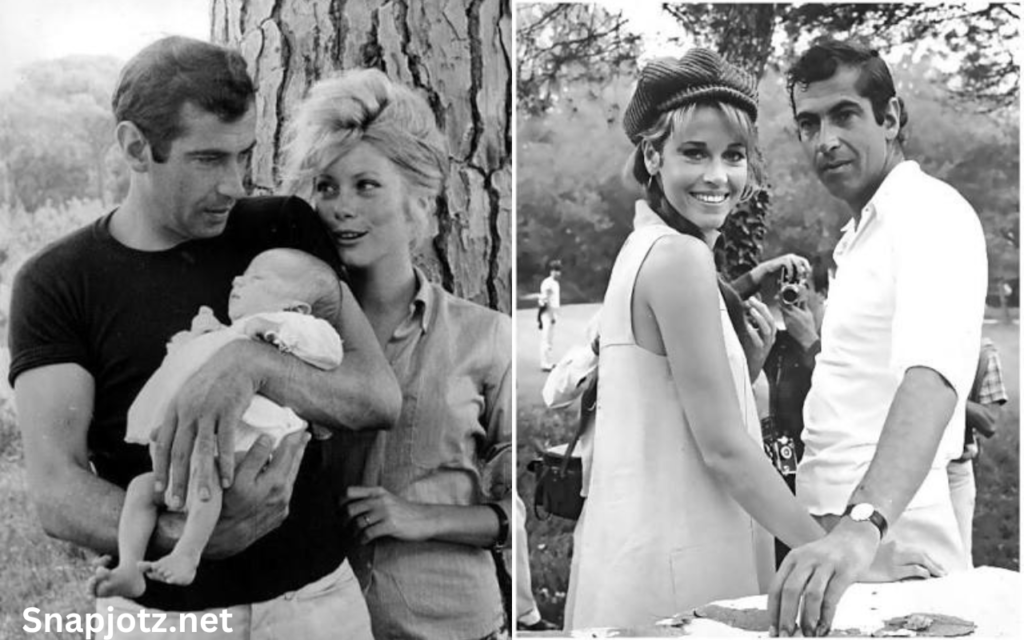

Few filmmakers have left a mark on European cinema as distinctive as Roger Vadim. Known for his daring storytelling, glamorous visual style, and ability to discover and shape some of the world’s most iconic actresses, Vadim became one of the most influential figures in French filmmaking during the second half of the twentieth century. Whether remembered for launching Brigitte Bardot to international fame with And God Created Woman or directing the cult science-fiction classic Barbarella, his career reflected a fearless willingness to challenge cinematic conventions and social norms. His films blended romance, sensuality, artistic ambition, and cultural commentary, making him one of the most talked-about directors of his era.
Table of Contents
ToggleAlthough Roger Vadim’s personal life often attracted as much attention as his films, reducing his legacy to celebrity relationships would overlook the remarkable influence he had on modern cinema. As a director, screenwriter, producer, novelist, and occasional actor, he continually explored themes of freedom, beauty, desire, and human relationships. His artistic choices sparked debate, inspired future filmmakers, and helped redefine how women were portrayed on screen during a period of significant cultural change.
His journey—from the son of a Russian-born diplomat to one of France’s internationally recognized filmmakers—is filled with ambition, creativity, controversy, and lasting influence. Understanding Roger Vadim means exploring not only the films he created but also the artistic movement and cultural transformation he helped shape across Europe and Hollywood.
Roger Vadim Quick Facts
| Fact | Details |
|---|---|
| Full Name | Roger Vadim Plemiannikov |
| Known As | Roger Vadim |
| Birth Date | January 26, 1928 |
| Death Date | February 11, 2000 |
| Age at Death | 72 years |
| Birthplace | Paris, France |
| Nationality | French |
| Profession | Film Director, Screenwriter, Producer, Author, Actor |
| Father | Igor Nikolaevich Plemiannikov |
| Mother | Marie-Antoinette Ardilouze |
| Siblings | One sister, Hélène Plemiannikov |
| Education | Studied Journalism and Writing at Sciences Po (did not graduate) |
| Famous Films | And God Created Woman, Dangerous Liaisons, Blood and Roses, Barbarella |
| Children | Four |
| Estimated Net Worth | Not publicly verified; wealth primarily derived from filmmaking, writing, and royalties |
| None | |
| X (Twitter) | None |
| None | |
| None |
Early Life and Family Background
Roger Vadim was born as Roger Vadim Plemiannikov in Paris on January 26, 1928, into a family with a fascinating multicultural heritage. His father, Igor Nikolaevich Plemiannikov, was a White Russian military officer, accomplished pianist, and later a French diplomat after becoming a naturalized French citizen. His mother, Marie-Antoinette Ardilouze, worked as a stage actress, exposing young Roger to literature, theatre, and the performing arts from an early age. This combination of diplomatic sophistication and artistic influence played a major role in shaping his worldview.
Because of his father’s diplomatic career, Vadim spent parts of his childhood living in North Africa and the Middle East. These experiences introduced him to different cultures, languages, traditions, and ways of thinking long before international travel became common. Exposure to diverse societies broadened his imagination and contributed to the cosmopolitan outlook that later became evident in his films, many of which explored identity, freedom, and cultural contrasts.
Life changed dramatically when his father died while Roger was still a young boy. The family returned to France, where his mother managed a hostel in the French Alps that reportedly provided refuge for people escaping Nazi persecution during World War II. Growing up during wartime exposed Vadim to both hardship and resilience, experiences that helped develop his appreciation for personal freedom and human dignity—ideas that frequently surfaced in his artistic work.
Education and the Road to Filmmaking
Roger Vadim’s formal education reflected the expectations placed upon him as the son of a diplomat. After returning to France, he enrolled at the prestigious Sciences Po (Paris Institute of Political Studies), where he studied journalism and writing. Although the institution prepared many students for careers in politics and diplomacy, Vadim soon realized that his passion lay elsewhere. He left before completing his degree, believing that storytelling, theatre, and cinema offered a more meaningful way to express his ideas about society, relationships, and human nature.
Determined to pursue the arts, Vadim joined the Théâtre Sarah Bernhardt, where he gained valuable acting experience and immersed himself in Paris’s vibrant post-war cultural scene. During this period, he met acclaimed filmmaker Marc Allégret, who recognized his creativity and hired him as an assistant director and screenwriter. Working under Allégret allowed Vadim to observe every aspect of filmmaking—from script development and casting to directing actors and managing productions. This apprenticeship became the true foundation of his cinematic career.
The experience also introduced him to some of France’s most respected writers and artists, including André Gide, Jean Cocteau, and Jean Genet. Surrounded by literary thinkers and filmmakers, Vadim refined his artistic vision and developed the elegant visual style that would later define his films. Rather than following traditional filmmaking conventions, he became interested in creating emotionally expressive stories that combined romance, psychology, beauty, and bold social themes.
Early Career and the Breakthrough That Changed European Cinema
Before directing his own films, Roger Vadim spent several years writing screenplays and serving as an assistant director on numerous productions. His early credits included Blanche Fury (1948), Maria Chapdelaine (The Naked Heart), Blackmailed, and several French-language projects directed by Marc Allégret. These experiences taught him practical filmmaking skills while helping him build relationships throughout the French film industry.
During these formative years, Vadim also began writing for magazines and experimenting with fiction. His ability to write compelling dialogue and emotionally layered characters soon earned respect among producers and directors. At the same time, he developed a reputation as someone willing to challenge traditional storytelling, particularly regarding romance, gender roles, and personal freedom. These themes would later become central to nearly every major film he directed.
The defining turning point arrived in 1956 with the release of And God Created Woman (Et Dieu… créa la femme), starring his wife Brigitte Bardot. The film shocked many audiences with its open portrayal of female sexuality and independence while simultaneously captivating viewers around the world. Although controversial upon release, it became an international success, transformed Bardot into a global superstar, and established Roger Vadim as one of Europe’s most talked-about directors. Many film historians regard the movie as an important influence on the changing landscape of French cinema that eventually led toward the French New Wave movement.
Building an International Reputation as a Director
Following the enormous success of his debut feature, Roger Vadim quickly became one of France’s most recognizable filmmakers. Rather than repeating the exact formula of his breakthrough film, he experimented with different genres, visual styles, and literary adaptations. His films often combined sophisticated cinematography with emotionally complex relationships, making them popular among audiences seeking both artistic expression and provocative storytelling.
Among his most acclaimed works was Dangerous Liaisons (1959), a modern adaptation of the classic French novel. He followed it with Blood and Roses (1960), a stylish gothic vampire film admired for its atmosphere and visual elegance. These productions demonstrated that Vadim was capable of directing more than romantic dramas, showing his interest in horror, psychological storytelling, and literary cinema. His versatility helped expand his reputation beyond France and into international markets.
The late 1960s brought another landmark achievement with Barbarella (1968), starring Jane Fonda. Mixing science fiction, fantasy, comedy, and striking costume design, the film became a cult classic despite receiving mixed reviews upon release. Over time, Barbarella gained lasting recognition for its imaginative visual style and became one of the defining science-fiction films of the decade. Today, it remains one of Roger Vadim’s most widely remembered works.
Major Films, Creative Style, and Lasting Contributions to Cinema
Roger Vadim never wanted to be viewed as a conventional filmmaker. Throughout his career, he deliberately chose projects that challenged social expectations and experimented with themes that many directors of his era avoided. His films frequently explored romance, female independence, desire, fantasy, and psychological conflict through visually elegant cinematography. While critics often debated his artistic choices, few denied his ability to create memorable cinematic experiences that stood apart from mainstream productions.
Among his most celebrated films are And God Created Woman (1956), No Sun in Venice (1957), Dangerous Liaisons (1959), Blood and Roses (1960), The Game Is Over (1966), Barbarella (1968), and Pretty Maids All in a Row (1971). Each project reflected a different stage of his artistic evolution. While And God Created Woman helped redefine modern French cinema, Barbarella became one of the most recognizable science-fiction cult classics ever produced, admired for its imaginative production design, fashion, and visual storytelling.
Vadim’s directing style emphasized atmosphere as much as narrative. Rather than relying on fast-paced action, he preferred expressive performances, luxurious settings, symbolic imagery, and emotionally charged dialogue. His work inspired later filmmakers interested in combining artistic cinema with commercial appeal, and many historians regard him as an important bridge between traditional French filmmaking and the more experimental movements that followed during the late 1950s and 1960s.
Some of Roger Vadim’s Best-Known Films
- And God Created Woman (1956)
- No Sun in Venice (1957)
- Dangerous Liaisons (1959)
- Blood and Roses (1960)
- The Game Is Over (1966)
- Barbarella (1968)
- Pretty Maids All in a Row (1971)
Personal Life, Marriages, and Family
Roger Vadim’s personal life received enormous media attention throughout his career, largely because of his relationships with some of the world’s most famous actresses. His first marriage was to Brigitte Bardot, whose international breakthrough came under his direction in And God Created Woman. Although their marriage ended in divorce, both remained central figures in French cultural history. Later, Vadim married Danish actress Annette Stroyberg, with whom he had a daughter, Nathalie.
During the early 1960s, Vadim was in a well-known relationship with Catherine Deneuve, and the couple had a son, Christian Vadim, who later became an actor. In 1965, he married Academy Award-winning actress Jane Fonda, and together they welcomed their daughter Vanessa Vadim, who became a filmmaker and environmental activist. Following that marriage, Vadim married Catherine Schneider, with whom he had another son, Vania, before eventually marrying actress Marie-Christine Barrault, who remained his wife until his death in 2000.
Although newspapers frequently focused on his romantic relationships, those close to Vadim often described him as intellectually curious, artistic, and deeply passionate about literature, filmmaking, and creative expression. His family life was closely connected to the arts, and several of his children continued careers in entertainment and filmmaking, extending his creative legacy into another generation.
Books, Writing Career, Awards, and Recognition
Beyond directing films, Roger Vadim established himself as a successful author. His published works include Memoirs of the Devil, The Hungry Angel, From One Star to the Next, and the widely discussed memoir Bardot, Deneuve & Fonda: My Life with the Three Most Beautiful Women in the World. These books offered readers insight into his creative philosophy, his experiences in the film industry, and his relationships with some of cinema’s biggest stars. His writing demonstrated the same expressive, reflective style that characterized his films.
Although Vadim was not known primarily as an awards-driven filmmaker, his influence on world cinema remains significant. His films achieved international commercial success, introduced groundbreaking ideas regarding gender and sexuality, and helped launch or elevate the careers of actresses who later became global icons. Film scholars continue to study his work for its contribution to European cinema, visual storytelling, and changing cultural attitudes during the twentieth century.
His reputation has also grown through retrospectives, academic discussions, and film festivals that revisit his most influential productions. While opinions about his films have varied over the decades, many critics now recognize Roger Vadim as a filmmaker whose artistic courage challenged conventions and expanded the possibilities of cinematic storytelling.
Net Worth, Income Sources, and Financial Success
Roger Vadim enjoyed a successful career that spanned nearly five decades, allowing him to build a comfortable lifestyle through multiple creative pursuits. Unlike many directors who relied solely on filmmaking, Vadim earned income as a film director, screenwriter, producer, novelist, playwright, and occasional actor. His films achieved both critical attention and commercial success in Europe and internationally, generating revenue through theatrical releases, television licensing, home video sales, and later DVD and streaming distribution.
Although no official financial records were ever released, several entertainment publications have estimated that Roger Vadim’s net worth was in the range of $10 million at the time of his death. Because these figures are based on estimates rather than verified financial disclosures, they should be viewed with caution. His wealth was primarily built through directing successful films, writing bestselling memoirs, producing television projects, and earning royalties from his creative works.
His most significant income sources included:
- Film directing and production fees.
- Screenwriting and adaptation rights.
- Book publishing and memoir royalties.
- Television directing during the 1980s and 1990s.
- Long-term royalties and licensing from classic films that continue to be distributed worldwide.
Even decades after their release, several of Vadim’s best-known films remain available through film archives, streaming services, and physical media collections, ensuring that his artistic legacy continues to reach new audiences.
Social Media Presence and Public Image
Roger Vadim belonged to an era long before social media transformed the relationship between celebrities and their audiences. Since he passed away in 2000, he never maintained official accounts on platforms such as Instagram, X (formerly Twitter), Facebook, TikTok, or LinkedIn. Instead, his reputation was built through newspaper interviews, television appearances, magazine profiles, books, and international film festivals.
Today, however, Vadim’s legacy remains active across the internet. Film enthusiasts regularly discuss his work on movie forums, social media platforms, and video essays dedicated to classic cinema. His films—particularly And God Created Woman and Barbarella—continue to be introduced to younger audiences through streaming platforms, retrospectives, and film-school courses. This ongoing online conversation demonstrates the lasting cultural relevance of his work, even in the digital age.
His public image has also evolved over time. During his lifetime, media coverage often emphasized his high-profile relationships with actresses such as Brigitte Bardot, Catherine Deneuve, and Jane Fonda. Modern film historians, however, increasingly focus on his artistic achievements, examining how his directing style influenced European cinema, challenged traditional storytelling, and reflected the social changes of the 1950s and 1960s.
Final Years, Death, and Enduring Legacy
During the final years of his career, Roger Vadim shifted much of his attention toward television productions, writing, and reflecting on his remarkable life through memoirs and autobiographical works. Although he directed fewer major feature films than in earlier decades, he remained an influential voice within French cinema and frequently shared insights about filmmaking, creativity, and the evolution of the entertainment industry. His books offered candid reflections on both his professional achievements and personal experiences, giving readers a deeper understanding of the man behind the camera.
Roger Vadim died of lymphoma in Paris on 11 February 2000, at the age of 72. His funeral brought together several of the extraordinary women who had played important roles in his life, including former wives Brigitte Bardot, Jane Fonda, Catherine Schneider, Annette Stroyberg, and his final wife, Marie-Christine Barrault. He was laid to rest in Saint-Tropez Cemetery, a fitting resting place for a filmmaker whose life became closely associated with French culture and cinema.
More than two decades after his passing, Roger Vadim remains an important figure in film history. His movies continue to be restored, screened at classic film festivals, studied in universities, and discussed by critics around the world. Directors and scholars recognize him for helping launch the careers of internationally celebrated actresses, expanding the boundaries of cinematic storytelling, and contributing to the modernization of European film. While opinions about some aspects of his work continue to evolve, his influence on visual style, popular culture, and the international film industry remains undeniable.
Conclusion
Roger Vadim’s life was one of artistic ambition, creative experimentation, and cultural influence. From his early years as the son of a Russian-born diplomat to becoming one of France’s most recognizable filmmakers, he consistently pursued stories that challenged conventions and celebrated individuality. His films combined elegance, emotion, and visual sophistication, helping redefine how romance, freedom, and femininity were portrayed on screen.
His career was marked by remarkable achievements, including directing groundbreaking films, mentoring future stars, writing acclaimed books, and leaving an unmistakable imprint on both French and international cinema. Even when his work sparked controversy, it encouraged conversations about art, society, and the evolving role of film as a medium of expression.
As Roger Vadim’s cinematic legacy continues to inspire filmmakers, film scholars, and movie lovers around the world, his remarkable journey stands as a reminder that creativity, courage, and a willingness to challenge convention can leave a lasting mark on culture. His story continues to encourage future generations to pursue artistic excellence, embrace originality, and create work that transcends time.