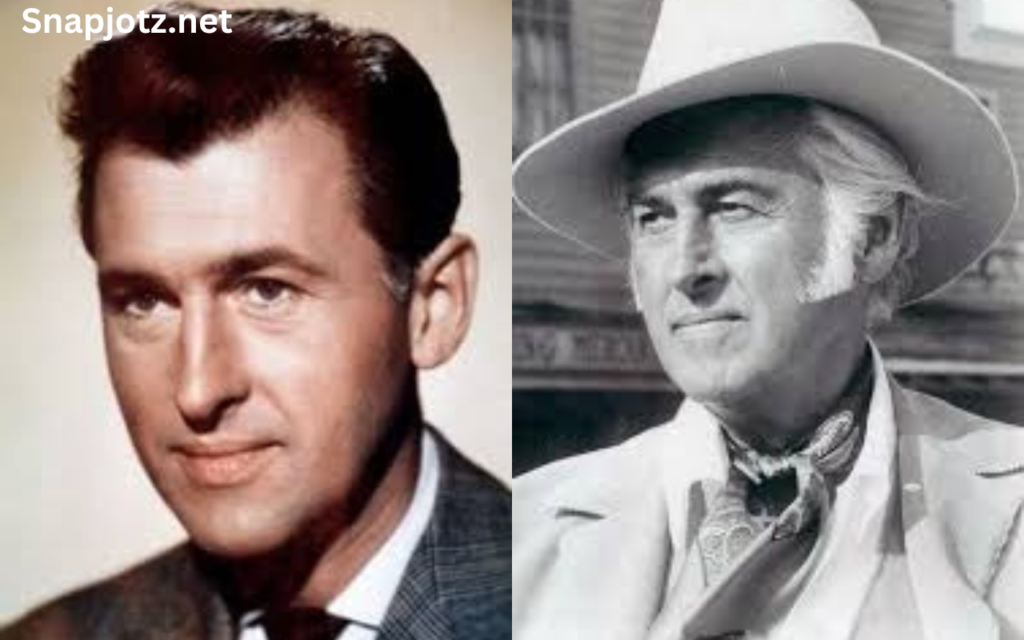

Stewart Granger was the kind of movie star who seemed almost designed for the golden age of cinema. Tall, striking and naturally commanding on screen, he became one of Britain’s most popular leading men during the 1940s before crossing the Atlantic and establishing himself as an international Hollywood star. His name became synonymous with romantic heroes, historical adventures, sword fights and larger-than-life characters, particularly through films such as The Man in Grey, King Solomon’s Mines, Scaramouche and The Prisoner of Zenda. Yet behind that polished image was a far more complicated journey involving theatre training, wartime service, personal disappointments, changing tastes in cinema and a career that lasted roughly six decades.
Born James Lablache Stewart in London in 1913, Granger did not initially plan to become an actor. He considered medicine, but eventually abandoned that path and turned toward the theatre. He trained at the Webber-Douglas School of Dramatic Art, worked in repertory theatre and gradually learned his craft in front of live audiences. That apprenticeship proved enormously valuable. By the time he became a major film star, he possessed not only the physical presence demanded of a leading man but also years of practical stage experience.
His rise was especially remarkable because it occurred during a turbulent period in British history. The Second World War disrupted his early professional development, while the British film industry was searching for performers who could capture the public imagination. Granger eventually became one of the defining stars of the Gainsborough melodramas before Hollywood offered him an even larger international stage. His career therefore provides a fascinating look at the transformation of a theatre-trained British actor into one of the classic cinema era’s best-known swashbuckling stars.
Stewart Granger’s Early Life and Family Background
Stewart Granger was born James Lablache Stewart on May 6, 1913, in Kensington, London. He was the only son of Major James Stewart, OBE, and Frederica Eliza Stewart, née Lablache. His maternal family connection to the celebrated Italian opera singer Luigi Lablache gave him an unusual link to the performing arts long before he became famous himself. The National Portrait Gallery records his birth name and later professional transformation, while biographical sources identify him as the great-grandson of Luigi Lablache.
His childhood and education did not immediately point toward the cinema. Granger attended Epsom College and originally considered pursuing medicine. The young James Stewart eventually realized, however, that a conventional professional career was not where his ambitions lay. His decision to leave medical studies and explore acting was an important turning point because it placed him on a completely different path from the one his early education might have suggested.
He subsequently studied at the Webber-Douglas School of Dramatic Art in London. Rather than becoming an overnight movie star, Granger spent years learning the fundamentals of performance through theatre. He worked with repertory companies, including Birmingham Repertory, and developed experience with live audiences before reaching London’s West End. This period helped shape the timing, confidence and stage discipline that later became important elements of his film persona.
From James Lablache Stewart to Stewart Granger
The change from James Lablache Stewart to Stewart Granger was more than a simple artistic decision. His birth name could easily have created confusion with the already-famous American actor James Stewart. As his own career developed, adopting a different professional name helped him establish an independent identity in the entertainment industry. He became known to friends as Jimmy, while audiences around the world knew him as Stewart Granger.
Granger’s early theatrical career included a stage debut in The Cardinal at the Little Theatre in Hull in 1935. He then worked with the Birmingham Repertory Company and appeared at the Malvern Festival. His progress eventually brought him to London’s West End, where he made his debut in The Sun Never Sets in 1938. These experiences were important because they gave him the opportunity to work through different types of characters instead of being immediately confined to the heroic screen persona that would later define him.
The theatre also taught Granger something he would carry into the rest of his career: the importance of understanding an audience. Repertory work demanded flexibility, discipline and the ability to communicate directly with people sitting only a short distance away. Granger later spoke warmly about those years, recognizing that live performance had helped teach him timing. That foundation became particularly useful when he moved into film, where subtle changes in expression and physical presence could dramatically influence a character.
Stewart Granger and World War II
Granger’s theatrical progress was interrupted by the Second World War. In 1940 he joined the British Army, temporarily putting his acting ambitions aside while Britain was engaged in the conflict. His military service was eventually cut short after he developed an ulcer, leading to his release from service. The interruption could have damaged a young actor’s momentum, but instead Granger returned to an entertainment industry that was entering a new period of opportunity.
The war had profoundly changed British society and also influenced popular entertainment. Audiences were drawn toward stories offering romance, adventure and emotional escape, and British studios increasingly recognized the commercial potential of glamorous stars. Granger’s appearance and theatrical background made him particularly well suited to this environment. He could project sophistication while also appearing physically capable of handling the action associated with heroic roles.
His return to acting therefore came at an unusually important moment. British cinema needed recognizable leading men, and Granger was ready for opportunities that would have been difficult to imagine when he was working as an unknown stage performer. His first major breakthrough was approaching, and it would transform his professional life almost overnight.
The Breakthrough with The Man in Grey
Stewart Granger’s major breakthrough came with The Man in Grey in 1943. Produced by Gainsborough Pictures, the film became one of the company’s most successful productions and helped establish the popular Gainsborough melodrama style. Granger appeared alongside Margaret Lockwood and James Mason, and the film’s success made him a highly recognizable British screen personality.
The film was important because it introduced audiences to the combination that would define Granger for years: physical attractiveness, romantic intensity, confidence and an element of danger. His performances were particularly effective in stories involving aristocratic settings, forbidden romance and emotional conflict. The Gainsborough productions gave him an image that was more glamorous than his earlier theatre work and positioned him as one of Britain’s leading romantic stars.
The success of The Man in Grey was followed by other popular films including Fanny by Gaslight, Love Story, Madonna of the Seven Moons and Caravan. Granger became part of a group of performers who helped define British popular cinema during the 1940s. His fame grew rapidly, and he developed a substantial following among audiences attracted to his handsome appearance and confident screen presence.
Stewart Granger’s Rise as a British Film Star
During the 1940s, Granger became one of Britain’s most prominent male movie stars. The National Portrait Gallery specifically notes his prominence in romantic film roles, including Waterloo Road in 1945. His filmography during this period showed that he could move between melodrama, romance, historical stories and more serious material while maintaining the appeal of a major leading man.
His popularity was not based solely on conventional good looks. Granger possessed a strong physical presence that made him convincing in roles requiring authority or action. He could play a romantic hero but also suggest aggression and determination when a story demanded it. That mixture helped distinguish him from more purely sentimental leading men and eventually prepared him for the swashbuckling roles that would become his Hollywood trademark.
Not every film during this period achieved the same level of commercial success. As British cinema gradually shifted toward more realistic postwar stories, some of Granger’s projects were less popular with audiences. Films such as Captain Boycott, Blanche Fury and Saraband for Dead Lovers demonstrated his willingness to tackle more serious material, but they did not reproduce the enormous popularity of the earlier Gainsborough melodramas.
Stewart Granger and Jean Simmons
Granger’s professional and personal life became closely connected with actress Jean Simmons. The two appeared together in Adam and Evelyne in 1949, and their relationship developed beyond the screen. The National Portrait Gallery confirms that they married in 1950 after having worked together professionally.
Their relationship attracted considerable attention because both were successful British performers who were preparing to enter Hollywood. Simmons was substantially younger than Granger, and their marriage became part of the public story surrounding his move to America. They eventually had a daughter, Tracy, before the marriage ended in divorce in 1960.
Granger had already been married to actress Elspeth March, and after his divorce from Simmons he later married Viviane Lecerf. His three marriages produced four children in total. Although his screen image often suggested a world of effortless romance, his private life was more complicated, marked by relationships that eventually ended and the ordinary emotional challenges that existed beyond his celebrity status.
Hollywood Success and King Solomon’s Mines
In 1950, Stewart Granger moved to Hollywood, beginning perhaps the most internationally recognizable chapter of his career. His arrival was significant because he was already an established British star, but American audiences had not yet experienced him on the same scale as British moviegoers. MGM gave him the opportunity to become a major Hollywood leading man.
His first major Hollywood triumph came with King Solomon’s Mines, released in 1950. Granger played Allan Quatermain opposite Deborah Kerr, portraying an experienced explorer drawn into an African adventure. The film combined exotic locations, romance, suspense and action, providing exactly the kind of role in which Granger’s screen personality could flourish. It introduced him to American audiences as a genuine swashbuckling star.
The success of King Solomon’s Mines transformed his American career. The tall British actor who had dominated British melodramas was now being marketed internationally as an action hero. His ability to handle physical roles made him valuable to studios producing large-scale adventure pictures, and the following years would produce several of the performances for which he remains best remembered.
Scaramouche and The Prisoner of Zenda
Two years after King Solomon’s Mines, Granger appeared in two defining films: Scaramouche and The Prisoner of Zenda. Both were released in 1952 and placed him firmly among the great adventure stars of classical Hollywood. The National Portrait Gallery lists both productions as central achievements of his Hollywood period.
Scaramouche was particularly important because it allowed Granger to demonstrate his fencing ability. He trained seriously for the role and approached the sword-fighting sequences with considerable discipline. IMDb’s biographical material notes that he took lessons from a retired Olympic fencing champion and practiced so extensively that he wore out numerous pairs of fencing shoes. The result was a performance remembered for one of the most famous sword fights in classic cinema.
In The Prisoner of Zenda, Granger took on the challenge of portraying two related characters, Rudolf Rassendyll and King Rudolf V. The story demanded romance, adventure, disguise and physical action, all elements that suited his established image. Together, Scaramouche and The Prisoner of Zenda helped make Stewart Granger one of the most recognizable swashbuckling actors of the 1950s.
Stewart Granger’s Acting Style and Screen Persona
Granger’s screen persona was built around a distinctive combination of elegance and physical confidence. He could appear refined in period costume, yet his performances rarely felt fragile. There was usually an underlying toughness that made audiences believe he could handle a sword fight, horseback chase or dangerous expedition. That quality became one of the foundations of his international appeal.
His height also contributed to his imposing presence. IMDb lists him at approximately 6 feet 2 inches, giving him a physical stature that worked particularly well in wide-screen adventure productions. But height alone could not explain his success. His voice, posture, expressions and controlled movement helped create the authoritative quality that directors could exploit in romantic and action roles.
Granger was also unusually candid about his own career. He sometimes expressed dissatisfaction with the way Hollywood treated him and later criticized some of his professional decisions. His comments suggest that he understood the limitations of being strongly identified with the costume-adventure genre. While that image made him famous, it could also restrict the kinds of dramatic opportunities available to him later in life.
Later Career in Film, Television and Theatre
As Hollywood changed during the 1960s, the type of leading-man role that had made Granger famous became less dominant. The studio system was changing, audiences were developing new tastes and younger stars were emerging. Granger nevertheless continued working in international cinema, appearing in productions outside the traditional Hollywood system. His career therefore evolved rather than ending abruptly.
During the 1970s and 1980s, television became increasingly important to him. He appeared in television movies and series, including productions in which he could use his established reputation while adapting to the smaller-scale environment of television. His later work demonstrated that he was willing to continue performing even when he was no longer receiving the type of major studio roles associated with his peak years.
Theatre remained another important part of his professional identity. In 1989, Granger appeared with Rex Harrison in a Broadway revival of The Circle. This was a fitting late-career achievement because his professional journey had begun in theatre decades earlier. Returning to the stage allowed him to reconnect with the form of performance in which he had first learned his craft.
Stewart Granger’s Family and Personal Life
Granger was married three times. His first wife was actress Elspeth March, whom he married in 1938. The marriage produced a son and daughter and ended in divorce in 1948. His second marriage, to Jean Simmons, began in 1950 and ended in 1960, with their daughter Tracy becoming part of his family.
His third marriage was to Viviane Lecerf, beginning in 1964 and ending in divorce in 1969. They had a daughter together. According to contemporary reports, Granger ultimately had four children: three daughters and one son. His family life was therefore considerably broader than the public might have assumed from his carefully constructed movie-star image.
Away from the screen, Granger was known for having a strong personality and a direct manner. His later interviews and autobiographical comments reveal someone who was not always comfortable with the artificiality of celebrity culture. He could be proud of his achievements while also being sharply critical of the industry that had created his fame. That mixture of confidence and frustration makes his personal story particularly interesting.
Stewart Granger’s Net Worth and Sources of Income
There is no reliable historical financial record that allows a precise modern net-worth figure for Stewart Granger to be stated with confidence. Numerous celebrity websites publish estimated values for actors from Hollywood’s golden age, but those numbers frequently lack documented evidence. For that reason, it is more responsible to discuss the sources of his wealth rather than present an invented figure as fact.
Granger earned money primarily through his acting career, including British films, Hollywood studio productions, international movies, television appearances and stage work. His earnings increased substantially once he became a major leading man. His involvement in major MGM productions such as King Solomon’s Mines, Scaramouche and The Prisoner of Zenda placed him among the industry’s highly visible stars.
His long career also meant that his income was spread across multiple decades and entertainment formats. However, without complete estate records and reliable documentation of investments, contracts and assets, assigning a precise net-worth amount would be speculative. The safest conclusion is that Granger achieved considerable financial success through his unusually long career, but his exact wealth at death is not publicly established.
Did Stewart Granger Have Social Media?
Stewart Granger did not have Instagram, Facebook, Twitter/X or LinkedIn accounts. He died in 1993, long before social media became a normal part of celebrity life. Consequently, any modern account using his name should be viewed as a fan, archival or unofficial account unless there is strong evidence establishing otherwise.
His relationship with audiences was instead built through cinema magazines, newspapers, radio, television interviews, fan clubs and studio publicity. During his peak years, photographs of Granger were widely circulated, contributing to the carefully constructed image of the handsome British movie hero. The National Portrait Gallery’s collection contains eight portraits connected with him, demonstrating the extent to which his public image was documented.
Today, his digital audience exists through classic-film communities, streaming platforms, film databases, archival publications and social-media fan pages. Although Granger himself never posted a photograph or interview online, modern technology has allowed his performances to reach viewers who were born long after his death. His influence therefore continues in a very different media environment from the one in which he originally became famous.
Stewart Granger’s Final Years and Death
Stewart Granger continued working well into the later stages of his life. Even after the major Hollywood studio era had passed, he accepted television and stage opportunities and remained professionally connected to acting. His later career may not have matched the enormous popularity of the early 1950s, but it demonstrated remarkable longevity. Contemporary reports noted that he had appeared in more than 60 films and continued performing in television and theatre late in his career.
Granger died on August 16, 1993, in Santa Monica, California, at the age of 80. Contemporary reports said he had been suffering from cancer, while IMDb records prostate cancer as the cause of death. His death brought an end to a career spanning approximately six decades.
News coverage following his death emphasized the qualities that had defined him for generations of moviegoers. He was remembered as a tall, elegant British star who had successfully crossed from British cinema into Hollywood and become one of the era’s best-known adventure heroes. His death marked the passing of one of the final major representatives of a particular style of movie stardom.
Stewart Granger’s Lasting Legacy in Classic Cinema
Stewart Granger’s legacy is inseparable from the golden age of British and Hollywood cinema. He helped define the British romantic hero of the 1940s and later became an international symbol of the swashbuckling adventure star. His performances combined glamour, physicality and confidence in a way that suited the spectacular filmmaking style of the period.
His career also represents an important connection between British and American entertainment. He began in London’s theatre world, became a major British film star through Gainsborough Pictures and then moved to Hollywood, where he was given some of the industry’s biggest adventure roles. His success demonstrated that a British performer could become a genuine international star without losing the distinctive qualities that had made him popular at home.
Perhaps the clearest evidence of his lasting reputation is the continued interest in his best-known films. Scaramouche, King Solomon’s Mines and The Prisoner of Zenda remain associated with classic adventure cinema, while his earlier British films offer a window into the popular culture of the 1940s. The National Portrait Gallery’s collection of portraits further reflects his significance as a figure in British cultural history.
Conclusion: The Enduring Story of Stewart Granger
Stewart Granger’s life was a journey of reinvention. He began as James Lablache Stewart, a London-born student who once considered medicine, before discovering acting and training for the theatre. He worked through repertory companies, survived the interruption of wartime service and eventually found his breakthrough in British cinema. His success in The Man in Grey transformed him into a major star, while his move to Hollywood opened the door to the adventure films that would define his international reputation.
His story also shows that fame does not make a career simple. Granger experienced enormous success, but he also faced changing audiences, shifting studio priorities and the difficulty of moving beyond an established screen image. His three marriages and four children added another dimension to a life lived under the scrutiny of the entertainment industry. Yet he continued working through film, television and theatre, demonstrating a determination to remain an actor even after the era that had made him famous had passed.
Ultimately, Stewart Granger remains memorable because he represented something distinctive in movie history: the classic heroic leading man who could make romance feel glamorous, adventure feel dangerous and swordplay feel effortless. His journey from the stages of Britain to Hollywood’s biggest adventure pictures is a reminder that lasting careers are built through patience, adaptability and the courage to keep moving forward. Long after the cameras stopped rolling, his performances continued to introduce new audiences to the excitement and elegance of classic cinema—and that enduring connection is perhaps the most meaningful part of Stewart Granger’s legacy.