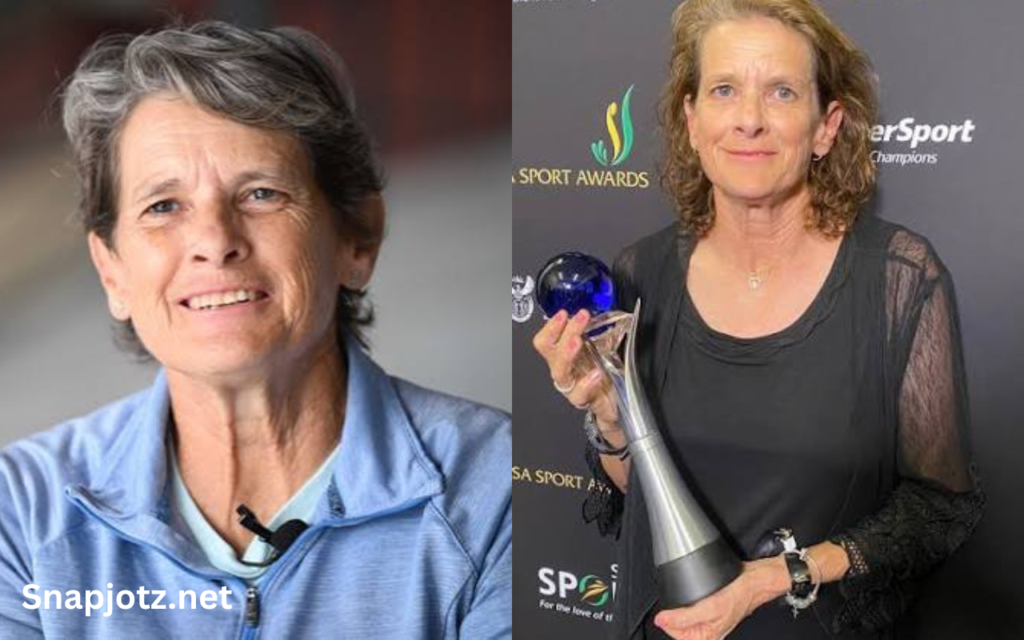

Zola Budd is one of the most fascinating and misunderstood figures in modern distance running. Long before social media could turn an athlete into an overnight global celebrity, Budd became an international sensation as a teenager because of her extraordinary speed, her preference for running barefoot and the political circumstances surrounding her rise. Born in Bloemfontein, South Africa, in 1966, she went from being a relatively unknown teenage runner to a world-record holder and Olympic competitor within an astonishingly short period. Her career eventually included two World Cross Country titles, two Olympic appearances and some of the fastest middle- and long-distance performances of her generation.
Yet statistics alone cannot explain the fascination surrounding Zola Budd. Her story became entangled with apartheid-era politics, British citizenship, international sporting boycotts and one of the most controversial moments in Olympic distance-running history. At the 1984 Los Angeles Olympics, she collided with American favorite Mary Decker during the 3,000 metres, an incident that changed the way millions of people viewed her. Budd was only 18, and the immense media attention placed extraordinary pressure on an athlete who had not yet developed the experience to deal with worldwide fame.
Decades later, however, Zola Budd’s legacy has become much broader than that single Olympic race. She continued running, competed over longer distances, coached younger athletes, earned a university degree and eventually returned to South Africa after years in the United States. Her life offers a remarkable combination of sporting excellence, personal resilience and reinvention. Understanding the whole journey reveals an athlete whose greatest achievement may not have been any individual record, but her ability to continue moving forward after one of the most difficult beginnings imaginable for a sporting career.
Zola Budd’s Early Life and Family Background
Zola Budd was born on May 26, 1966, in Bloemfontein, in South Africa’s Free State province. She grew up in an environment where running was not initially presented as a glamorous professional career. Instead, physical activity and outdoor life were simply part of her surroundings. Her early relationship with running developed naturally, and she became known for training and competing without shoes. This unusual style would eventually become one of the most recognizable characteristics of her sporting identity.
The barefoot running that later fascinated international audiences was not originally intended as a publicity statement. Budd explained that many children around her simply ran barefoot and that few young runners had expensive spikes. To her, therefore, running without shoes felt completely natural rather than revolutionary. What seemed extraordinary to spectators was simply the way she had learned to move comfortably and efficiently. That distinction is important because it shows how much of Budd’s early athletic development came from instinct and environment rather than carefully constructed branding.
Her family environment also played an important role in shaping her. Budd’s early years were marked by close family relationships, and her older sister Jenny was particularly important in her childhood. Running became connected with those personal relationships and with the countryside around her home. Later, when tragedy struck the family, running became even more deeply connected to Budd’s emotional life. The sport was not merely a competition for her; it became a place where she could process difficult emotions and regain a sense of balance.
How Zola Budd Became a Running Sensation
Budd’s natural ability became increasingly obvious during her teenage years. She progressed rapidly through middle- and long-distance events and began producing performances that attracted attention far beyond South Africa. Her combination of endurance, speed and fearlessness made her especially dangerous over races requiring a strong finishing ability. She could compete successfully across several distances, from the 1500 metres to the 5000 metres, rather than being limited to one specialty.
Her breakthrough came in spectacular fashion in 1984. At only 17, Budd ran 5,000 metres in 15:01.83 in South Africa, a time that was faster than the existing women’s world record. However, because the performance occurred in apartheid-era South Africa, the international athletics authorities did not ratify it as an official world record. South African athletes were effectively excluded from international competition because of the sporting boycott against the country’s apartheid government.
The performance nevertheless transformed Budd’s reputation. She was no longer simply a talented young South African runner; she had become one of the most talked-about prospects in world athletics. The political situation meant that her sporting future was tied to questions far outside the running track. Her extraordinary talent had arrived at precisely the wrong historical moment for an athlete who wanted simply to compete. That tension would shape virtually every major decision of the next few years.
The Political Controversy Around British Citizenship
Because South Africa was excluded from major international sporting competition, Budd faced the possibility of becoming one of the world’s best runners without being able to participate in the Olympics or many other major international events. Her British ancestry provided a possible route into international athletics. Her grandfather had been born in England, allowing Budd to obtain British citizenship and eventually compete for Great Britain.
The process was heavily influenced by British media interest, particularly the Daily Mail. Budd’s move to Britain became a major news story, and she was suddenly expected to carry not only her own ambitions but also the expectations of a newspaper campaign and a country eager to see her compete internationally. At just 17, she was thrust into a political and media environment that would have been difficult even for a mature professional athlete to manage.
Budd later reflected that the experience was deeply stressful. She was not a political campaigner, yet the public often expected her to explain or defend the politics of the country where she had been born. Her sporting identity became inseparable from apartheid, even though she had no responsibility for creating the political system. That distinction became one of the saddest elements of her early fame: an exceptionally young runner was being asked to answer questions about international politics when what she really wanted to do was run.
Zola Budd and the 1984 Los Angeles Olympics
The 1984 Los Angeles Olympics represented the biggest stage of Budd’s young career. She entered the women’s 3,000 metres for Great Britain, carrying extraordinary expectations after her record-breaking performances. At only 18, she was competing in an atmosphere where every movement was being watched and analyzed. Her barefoot appearance made her instantly recognizable, while the politics surrounding her selection ensured that she was one of the most discussed athletes at the Games.
During the 3,000-metre final, Budd was involved in a collision with American star Mary Decker. The contact caused Decker to fall out of the race, while Budd continued and eventually finished seventh. The crowd reaction was harsh, and Budd was booed as she completed the race. The incident became one of the defining images of the 1984 Olympics and remained attached to her public identity for years afterward.
What is often lost in simplified retellings is that Budd was a teenager experiencing an accident during an extremely intense race. The incident was not a deliberate attempt to remove Decker from competition, and the international athletics authorities did not hold Budd responsible for the collision. Yet the emotional reaction was already overwhelming. Budd later said she regretted going to the 1984 Olympics because she believed she was too young and inexperienced to cope with the political pressure, media attention and emotional consequences.
Zola Budd’s World-Record Achievements
The Olympic controversy did not end Budd’s elite career. In fact, some of her most impressive athletic achievements came shortly afterward. In 1985, while representing Great Britain, she officially captured the women’s 5,000-metre world record with a time of 14:48.07. World Athletics’ historical progression confirms that Budd took the record in London on August 26, 1985, before Ingrid Kristiansen reclaimed it the following year.
Budd’s 1985 season was extraordinary because she was producing world-class performances across multiple distances. Her personal bests include 3:59.96 for 1500 metres, 4:17.57 for the mile and 8:28.83 for 3,000 metres. World Athletics identifies her 3,000-metre and mile marks as under-20 world records, demonstrating just how exceptional she was while still very young.
Her record-breaking season also established that the Olympic collision had not defined her athletic ability. She continued racing against some of the best women in the world and demonstrated that she could perform at the highest level under different circumstances. Although her 5,000-metre world record lasted only about a year, its importance remains considerable because it represented an enormous breakthrough for women’s distance running during an era when the event was undergoing rapid development.
World Cross Country Championship Success
One of the strongest parts of Budd’s competitive record came in cross-country running. She won the World Cross Country Championships in 1985 and successfully defended the title in 1986. World Athletics lists her as a two-time World Cross Country champion, an achievement that stands among the most significant accomplishments of her career.
Cross-country racing demanded a different combination of skills from track competition. Athletes had to handle changing terrain, uneven surfaces, weather conditions and tactical shifts while maintaining a punishing pace. Budd’s natural running ability and comfort on varied surfaces made her particularly effective in this discipline. Her barefoot style, which attracted so much attention on the track, was arguably even more striking when she competed in cross-country conditions.
Her two world titles also provide an important perspective on her career. If someone knows Budd only because of the 1984 Olympic incident, they miss a substantial part of her athletic achievements. She was not merely a controversial Olympic participant. She was a genuine world champion whose performances placed her among the strongest distance runners of her era. Her cross-country victories helped establish her sporting reputation independently of the Decker controversy.
Returning to South Africa and the 1992 Olympics
Budd eventually returned to South Africa in 1988 after the intense period surrounding her British career. Her relationship with international competition had become complicated, but the end of her British chapter did not mean the end of her connection with elite athletics. When South Africa eventually returned to the Olympic movement, Budd was once again able to compete under the flag of her birth country.
At the 1992 Barcelona Olympics, Budd represented South Africa in the 3,000 metres. This was symbolically very different from her first Olympic experience. In Los Angeles, she had represented Great Britain amid enormous political and media controversy; in Barcelona, she was competing for the country where she had been born. Although she did not reach the final, her participation represented an important chapter in the complicated political history of South African sport.
The 1992 Games also showed how much Budd’s life had changed since she was the teenage sensation of 1984. She was no longer simply a young athlete being moved between countries by adults and sporting organizations. She had experienced international competition, intense public scrutiny and the pressures of fame. Her return to the Olympic stage therefore carried a sense of maturity and personal history that was absent eight years earlier.
Marriage, Children and Life Away From Elite Track Running
Budd married Mike Pieterse in 1989, and the couple eventually had three children. Family became increasingly important as her competitive career evolved, particularly after the extraordinary pressures of her teenage years. Later reporting described her as a mother who valued the experiences of family life more deeply than the medals and records that had once dominated public attention.
For many years, Budd and her family lived in the United States. She eventually became involved in coaching and continued participating in running events, including competitions at masters level and longer-distance races. A 2009 Los Angeles Times profile described her life in Myrtle Beach, South Carolina, where she was balancing family life with a renewed interest in competitive running.
Her later career reveals how successfully she adapted to life after international track fame. Instead of treating the end of her peak years as the end of her identity, she found new roles within the sport. Coaching allowed her to pass experience to younger athletes, while continued competition kept her physically and emotionally connected to running. The sport that had once made her famous became something much more personal and sustainable.
Education and Zola Budd’s Life Beyond Athletics
Although athletics dominated much of Budd’s youth and early adulthood, education remained part of her long-term development. She completed a Bachelor of Arts degree through the University of South Africa in 2002. UNISA recognizes her as an alumnus and identifies her among its notable record-breaking athletes.
Completing a university degree after such an unconventional international sporting career is significant because Budd’s teenage years had been consumed by training, competition, political controversy and media attention. Returning to academic study demonstrated that she was willing to develop an identity outside athletics. Education gave her another avenue through which to explore interests and prepare for life beyond professional competition.
Her academic achievement also contributes to a more complete picture of her personality. The public image of Zola Budd was often dominated by her speed and her bare feet, but those details represent only one part of a much broader life. Athlete, student, wife, mother, coach and endurance runner are all parts of her story, and each stage reveals a different aspect of the person behind the famous name.
Zola Budd’s Later Running Career
Budd did not completely leave competitive running behind after her Olympic years. Instead, she gradually expanded into longer-distance events, including road races, marathons and ultramarathons. Her later personal-best records show that she remained capable of serious endurance performances well into adulthood. The breadth of her career eventually stretched from 800 metres all the way to the marathon.
One of the most notable later challenges was the Comrades Marathon in South Africa. Budd completed the famous ultramarathon in 2012 in 8:06:09 and earned a Bill Rowan Medal. The event was a fitting choice for someone whose athletic identity had always been closely connected with endurance and South African running culture.
These later races also carried a different meaning from her teenage competitions. As a young athlete, Budd was racing under enormous expectations and frequently against the clock. As an older runner, she could approach competition more as a personal challenge. Running became less about proving herself to newspapers, officials or spectators and more about preserving something that had always mattered deeply to her.
Zola Budd’s Return to South Africa
After spending roughly 12 years in the United States, Budd returned to South Africa permanently with her husband. News24 reported in 2021 that she had settled outside Stellenbosch and was happy to be back in the country of her birth. By that stage, her children were adults and had left home, making the decision to return feel more natural for the couple.
The move represented an emotional homecoming after decades of international travel. Budd had spent much of her life moving between South Africa, Britain and the United States, with each location representing a different phase of her identity. Returning to South Africa allowed her to reconnect with the landscape and culture that had shaped her childhood and early running career.
Her life near Stellenbosch also reflected the quieter chapter that followed her years of international competition. Instead of stadium crowds, Olympic headlines and constant media attention, she could enjoy a more private environment. The return did not erase the difficult chapters of her past, but it placed them within a much larger life story in which family, nature and running continued to matter.
Zola Budd’s Personality, Beliefs and Relationship With Running
One of the most revealing aspects of Budd’s later interviews is the way she describes running. She has repeatedly indicated that athletic records and medals are temporary achievements, while relationships and personal memories have much greater lasting value. That perspective is striking considering how much of her youth was consumed by the pursuit of world-class times.
Budd has also described running as something that reconnects her with nature and gives her a sense of peace. That idea helps explain why she continued running long after the international spotlight had disappeared. For her, running was not simply an occupation or competitive discipline. It became a personal practice that helped her remain grounded.
This philosophy represents perhaps the greatest transformation in her life. The teenage Zola Budd was surrounded by people measuring her success in seconds, records and medals. The mature Zola Budd learned to measure success differently. Family, friendship, freedom and the simple experience of moving through the landscape became more meaningful than public recognition. That evolution makes her later story every bit as interesting as her early records.
Zola Budd’s Net Worth and Sources of Income
There is no dependable public financial record that establishes Zola Budd’s exact current net worth. Various websites may publish numerical estimates, but without documented financial statements, verified contracts or authoritative disclosures, those figures should not be treated as confirmed facts. A responsible biography should therefore avoid presenting a speculative number as if it were official.
During her peak athletic years, Budd’s potential sources of income included race appearances, sponsorship opportunities, media interest and commercial arrangements associated with her international fame. Her later professional activities also included coaching and competitive running. However, the financial structure of elite athletics in the 1980s was very different from today’s global sports economy, and her earnings cannot be reliably calculated from modern celebrity-athlete comparisons.
What can be established with much greater confidence is the value of her sporting achievements. She became a world-record holder, won two World Cross Country Championships and competed at two Olympic Games. Her legacy is therefore better measured through her athletic contribution and influence than through unverified estimates of personal wealth.
Zola Budd’s Social Media and Public Presence
Zola Budd’s public profile is relatively understated compared with contemporary athletes. Unlike many current Olympic stars who maintain large Instagram, TikTok, X and other social-media audiences, Budd’s story has largely been preserved through interviews, athletics organizations, documentaries and retrospective journalism. World Athletics and Team GB remain important sources for understanding her sporting career.
There are references online to accounts associated with the name Zola Budd, but readers should be careful when deciding whether a social-media profile is genuinely official. A biography should not label an account as authentic simply because it uses her name or photographs. At present, there is not enough reliable evidence to confidently list a verified Instagram, X/Twitter or LinkedIn account as her official personal profile.
That limited social-media presence is actually consistent with Budd’s broader personality. She became famous during an era when athletes did not have the ability to control their own online narrative. Her life was once discussed constantly by newspapers and broadcasters, often without her having any direct way to respond. Her later preference for a quieter public life can therefore be understood as part of her journey toward privacy and independence.
Zola Budd’s Lasting Legacy
Zola Budd’s athletic record remains extraordinary. World Athletics lists her as a two-time World Cross Country champion and records her exceptional personal bests, including 8:28.83 for 3,000 metres and 4:17.57 for the mile. Her 5,000-metre world record of 14:48.07 is also permanently recorded in the historical progression of the event.
But her influence extends beyond statistics. Budd became a symbol of several complicated subjects at once: the intersection of sport and politics, the pressures placed on teenage athletes, the consequences of instant fame and the possibility of rebuilding a life after public controversy. Her experience demonstrated that sporting talent does not protect an athlete from emotional vulnerability or political circumstances.
Perhaps the most meaningful part of her legacy is that she eventually reclaimed running for herself. The sport that had once become a source of immense pressure gradually returned to being something personal. Through coaching, distance racing and her continuing relationship with the outdoors, Budd found a way to preserve the joy that had brought her to running as a child. Her story is therefore not simply about a record-breaking teenager; it is about a woman who spent decades learning what running meant when nobody was watching.
Conclusion
Zola Budd’s life cannot be captured by a single Olympic race, a world record or the image of a barefoot teenager running around a track. She was a remarkably gifted athlete who emerged from South Africa at a politically complicated time, became a world-record holder before reaching adulthood, won two World Cross Country Championships and represented two countries at the Olympic Games. Her performances placed her firmly among the most memorable distance runners of her generation.
At the same time, her journey was deeply human. She experienced grief, political pressure, public criticism, family strain and the consequences of being famous before she was emotionally prepared for it. Yet she continued to run, continued to develop and eventually built a life that extended far beyond the expectations placed upon her as a teenage sporting sensation. Her university education, family life, coaching work and later endurance competitions all demonstrate an ability to reinvent herself rather than remain trapped in the identity created by her early fame.
Today, Zola Budd’s story offers a powerful lesson about resilience and perspective. Records eventually disappear from the headlines, championships pass to new generations and public controversies become part of history, but the ability to recover, grow and continue pursuing something meaningful can last a lifetime. Zola Budd’s legacy is ultimately not just that she ran extraordinarily fast; it is that, after a career filled with circumstances beyond her control, she found a way to keep running on her own terms.