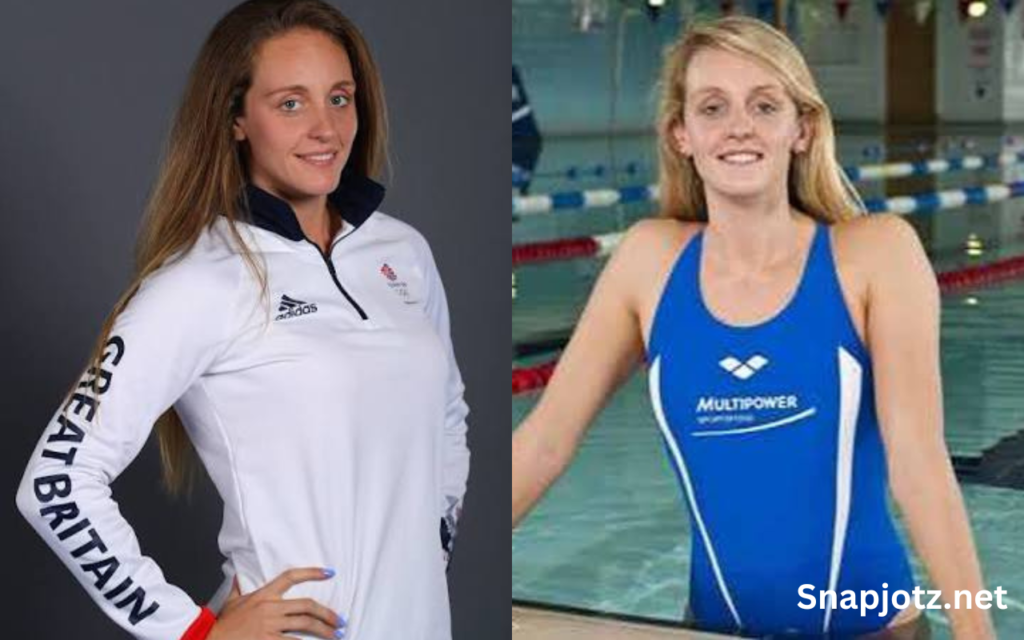

Fran Halsall is remembered as one of the most accomplished British sprint swimmers of her generation, a fiercely competitive athlete whose career was defined by speed, consistency and an extraordinary ability to perform on major international stages. Born in Southport, England, Francesca Jean Halsall rose from promising young swimmer to three-time Olympian, world champion and one of the most decorated English swimmers of her era. Her speciality was sprint swimming, particularly the 50m and 100m freestyle, although she also achieved major success in butterfly and relay events. World Aquatics records 28 medals for Halsall across its tracked international competitions, including eight gold, 10 silver and 10 bronze medals.
What makes Fran Halsall’s story particularly fascinating is that her career cannot be reduced to a medal count. She experienced the excitement of international success as a teenager, the pressure of competing at home during the London Olympics, the frustration of narrowly missing an Olympic podium and ultimately the difficult decision to leave competitive swimming while still only 26. Her final Olympic appearance at Rio 2016 ended with a fourth-place finish in the 50m freestyle, just 0.02 seconds away from bronze. Rather than allowing that near-miss to define her, Halsall eventually embraced a new chapter beyond elite sport.
Her journey offers a compelling look at what it takes to become an elite athlete and, perhaps more importantly, what it takes to discover an identity beyond sport. Fran Halsall’s biography encompasses childhood ambition, Olympic pressure, world records, Commonwealth success, mental resilience, retirement, business interests and a life shaped by lessons learned in the swimming pool.
Fran Halsall’s Early Life and Family Background
Francesca Jean Halsall was born on April 12, 1990, in Southport, England. Growing up in the north-west of England, she developed a relationship with swimming that would eventually transform from a childhood activity into a full-time international sporting career. She attended St Mary’s College in Crosby, and her education took place alongside the increasingly demanding training and competition schedule that came with becoming an elite swimmer. Her early years were important not simply because they produced a talented athlete, but because they established the discipline and competitive mentality that later became central to her career.
Like many successful young athletes, Halsall’s development depended on considerable support away from the pool. Competitive swimming requires early mornings, long training sessions, frequent travel and a willingness from the athlete and family to organise everyday life around sport. As Halsall progressed through junior competition, it became increasingly clear that she possessed unusual sprinting ability. Her progression was fast enough that by her mid-teens she was already being considered for senior international competition, placing her on a pathway toward the Commonwealth Games and eventually the Olympics.
There was also an interesting contradiction in Halsall’s early relationship with swimming. The sport that ultimately became her profession was not something she had always found effortless or enjoyable as a child. Her later reflections about her development revealed that swimming initially involved discomfort and anxiety before gradually becoming something she embraced. That transformation is significant because it illustrates that elite talent does not necessarily begin with instant passion. Sometimes confidence and enjoyment develop only after a young person discovers that they are good at something and begins to understand what it can offer them.
Education and Development as a Young Athlete
Halsall attended St Mary’s College, Crosby, before continuing her education while developing within the British elite swimming system. Her association with Loughborough University and the wider Loughborough sporting environment became particularly important as her competitive career developed. Loughborough has long been closely associated with high-performance sport in Britain, giving athletes access to specialist coaching, training facilities and an environment populated by other elite competitors.
Balancing education with international swimming was not a simple task. By the time Halsall reached her mid-teens, training and competition were already becoming central parts of her daily routine. Young athletes in this position must learn skills that extend beyond physical preparation: managing time, dealing with travel, recovering properly, maintaining concentration and coping with expectations. Those experiences helped prepare Halsall for the demands of senior international competition.
Her early development also demonstrated why sprint swimming requires such attention to detail. In events such as the 50m freestyle, there is very little room for error. Starts, underwater phases, stroke efficiency, breathing patterns and turns can all influence the result. Halsall eventually became renowned for her ability to produce exceptional times over short distances, and her personal-best performances show how technically refined she became. World Aquatics lists her long-course 50m freestyle best at 23.96 seconds and her short-course best at 23.44 seconds.
Fran Halsall’s International Breakthrough at the 2006 Commonwealth Games
Fran Halsall’s international breakthrough arrived at the 2006 Commonwealth Games in Melbourne when she was only 15. She was the youngest member of the Team England swimming squad and immediately made an impression by helping England win silver in both the 4x100m freestyle relay and 4x100m medley relay. British Swimming describes those performances as the beginning of a decade-long international career that would eventually produce more than 30 medals at World, European and Commonwealth level.
The significance of that debut went beyond two relay medals. Competing successfully at a major senior championship at such a young age gave Halsall experience of the pressure associated with international sport. She was suddenly sharing a competition environment with established swimmers while representing England on a major stage. Instead of being overwhelmed by the occasion, she demonstrated that she could contribute at senior level despite her youth.
The same year, she continued her rise at the European Championships. Halsall helped Great Britain win gold in the 4x100m medley relay, giving her a European title before she had even reached adulthood. Her rapid development meant that the transition from junior prospect to senior international swimmer happened remarkably quickly. Within two years, she would be competing at the Olympic Games, turning what had initially looked like promising potential into a genuine world-class career.
Beijing 2008 and Her First Olympic Games
The 2008 Beijing Olympics represented the next major milestone in Fran Halsall’s career. After establishing herself internationally, she earned selection for Great Britain and entered her first Olympic Games while still a teenager. The scale of the event was dramatically different from anything she had experienced before, with global attention focused on every race and every medal contender.
Halsall competed in multiple events at Beijing, including the 100m freestyle, where she reached the final and finished eighth. Although eighth place did not produce an Olympic medal, reaching an Olympic final at such a young age was itself a significant achievement. Her performance confirmed that she could handle the transition from European and Commonwealth competition to the world’s biggest sporting stage.
The Beijing experience also helped establish her as one of Britain’s leading sprint swimmers. She had already accumulated international medals, but the Olympics gave her a new level of exposure and experience. Importantly, she did not treat Beijing as the end of her development. The following season would become one of the most important periods of her career, as she moved from promising Olympian to genuine world championship medal contender.
The 2009 World Championships and Her First Major Individual Medal
At the 2009 World Championships in Rome, Halsall produced one of the defining performances of her early career by winning silver in the women’s 100m freestyle. Her time of 52.87 seconds was a British record at the time, underlining just how rapidly she had developed as a sprint specialist. World Aquatics continues to list 52.87 as one of her significant long-course performances.
The silver medal was especially meaningful because it came in an individual event rather than solely through a relay. Halsall had already demonstrated her value to British teams, but an individual world championship medal provided a different kind of recognition. It showed that she could race the world’s best swimmers directly and finish among them.
Her 2009 season also demonstrated the importance of versatility. Although freestyle was her primary discipline, Halsall could compete effectively in butterfly and other events. Her short-course performances were particularly impressive, including a 23.44-second 50m freestyle and a 51.19-second 100m freestyle. These performances helped establish her as one of the fastest female sprinters in British swimming.
A Remarkable 2010 Season
The 2010 season was arguably one of the most productive periods of Fran Halsall’s career. At the European Championships in Budapest, she won five medals, including gold medals in the 100m freestyle and 4x100m medley relay. British Swimming later highlighted her five-medal performance as one of the outstanding achievements of her career.
Her success did not stop at the European Championships. At the 2010 Commonwealth Games in Delhi, Halsall added another five medals to her collection, including her first Commonwealth individual title in the 50m butterfly. She demonstrated an ability to compete successfully across multiple sprint disciplines despite the physical and mental demands of a busy championship schedule.
The combined European and Commonwealth performances established Halsall as a major figure in British swimming. She was no longer simply a promising athlete who had reached an Olympic final. She had become an established medal winner with the ability to produce results across different competitions, strokes and distances. Her career was entering a phase in which expectations would become significantly higher.
London 2012 Olympics and the Weight of Expectations
The London 2012 Olympics represented an enormous opportunity for Halsall. She was competing at a home Games, in front of British supporters, after several seasons of major international success. With her speed and growing reputation, expectations surrounding her Olympic campaign were considerable.
She reached four Olympic finals during the Games, including the 50m freestyle, but did not win an individual medal. British Swimming records that she finished fifth in the 50m freestyle at London 2012. For an athlete who had already won world and European medals, the outcome was understandably difficult. The gap between being a world-class swimmer and becoming an Olympic medallist can be incredibly small, and Halsall experienced that distinction firsthand.
The aftermath of London became an important turning point. Instead of simply increasing training volume or chasing faster times, Halsall began paying greater attention to the psychological side of elite competition. The experience forced her to consider what success meant to her and how she wanted to approach the next stage of her career. That process of rebuilding her confidence eventually contributed to a strong resurgence.
World Championship Bronze and Commonwealth Glory
At the 2013 World Championships in Barcelona, Halsall returned to the world podium by winning bronze in the 50m freestyle. It was her second long-course World Championship medal after the 2009 100m freestyle silver. The result confirmed that the disappointment of London had not diminished her ability to compete among the world’s best sprinters.
The following year became another standout chapter. At the 2014 Commonwealth Games in Glasgow, Halsall won gold in both the 50m freestyle and 50m butterfly. The double demonstrated her extraordinary sprint versatility and made her one of the biggest stars of England’s swimming team. Her 50m freestyle victory was particularly notable because she set a Commonwealth Games record of 23.96 seconds.
Halsall’s Commonwealth success was not an isolated achievement. British Swimming records 11 Commonwealth medals for England across her career. Her performances in Commonwealth competition became a defining part of her legacy because they demonstrated how consistently she could perform at major multi-sport events. Whether competing individually or as part of a relay team, she repeatedly delivered when the pressure was high.
The 2015 World Championship World Record
One of the greatest moments of Fran Halsall’s career came at the 2015 World Championships in Kazan. She was part of Great Britain’s mixed 4x100m medley relay team, swimming the freestyle leg, and the British quartet produced a world-record performance. The team won gold, giving Halsall her first long-course World Championship title.
The achievement was especially significant because mixed-gender relay events were relatively new on the major international swimming programme. Success therefore required not only individual speed but also excellent coordination among swimmers across different strokes. Halsall’s contribution on the freestyle leg was crucial to the team’s overall performance.
Winning a world title so late in her career also showed the longevity of her international level. She had first appeared at the Commonwealth Games as a teenager almost a decade earlier. By 2015, she was an experienced elite athlete who had learned how to handle pressure, adapt to changing competitive environments and remain effective against a new generation of challengers.
Rio 2016 and the Olympic Finish That Nearly Became a Medal
Fran Halsall’s third Olympic Games came in Rio de Janeiro in 2016. By then, she had experienced almost everything the sport could offer: European titles, Commonwealth gold, World Championship medals, national records and a home Olympics. Yet one major achievement remained missing from her résumé—an Olympic medal.
The 50m freestyle in Rio became the most dramatic illustration of how narrow the margins can be in elite swimming. Halsall finished fourth, missing the bronze medal by only 0.02 seconds. British Swimming described the result as a lifetime-best Olympic performance, despite the disappointment of narrowly missing the podium.
It would have been understandable if that result had left a permanent sense of unfinished business. Instead, it became part of the broader story of her resilience. A difference of two hundredths of a second separated Halsall from an Olympic medal, but her career contained so many other achievements that the result ultimately became evidence of her competitiveness rather than a definition of failure.
Fran Halsall’s Retirement From Swimming
On January 16, 2017, Fran Halsall announced her retirement from competitive swimming at the age of 26. Her decision came after more than a decade of international competition, three Olympic appearances and more than 30 medals at World, European and Commonwealth level.
Her retirement announcement was notable for the way she described her relationship with swimming. Rather than presenting the sport as simply a profession she was leaving behind, Halsall explained that she had never really viewed swimming as a career or a job. For her, it had been an experience that had provided opportunities, relationships, memories and lessons that would remain valuable long after competition ended.
Retiring at 26 also meant that Halsall had to confront a challenge familiar to many elite athletes: discovering what comes next. For years, virtually every part of her routine had been structured around training and competition. Moving beyond that environment required a new understanding of identity, ambition and purpose. Her willingness to embrace that transition became another important part of her story.
Fran Halsall’s Personal Life and Marriage
Away from the swimming pool, Halsall has generally maintained a relatively private personal life. She has occasionally shared glimpses of her interests and personality, but she has not built her public profile around constant exposure of her private affairs. That approach has allowed her sporting achievements to remain the primary focus of her public legacy.
Halsall married former professional rugby league player Jon Wilkin in 2018. Wilkin enjoyed a long career in rugby league and later became involved in sports broadcasting. Their relationship brought together two people who understood the demands of elite sport, including training, travel, competition pressure and the challenge of maintaining a life outside professional competition.
Her personality during her competitive years was often described as energetic and engaging. Interviews and athlete profiles revealed a swimmer who could combine intense competitive ambition with humour and a lively outlook. That balance mattered because elite sport can easily become all-consuming. Halsall’s ability to maintain interests outside swimming helped give her identity greater depth than her results alone might suggest.
Fran Halsall’s Life After Competitive Swimming
Retirement did not mean that Halsall abandoned sport completely. Instead, she began exploring opportunities that allowed her to use the skills developed during her athletic career in entirely different settings. One example was her involvement in Common Ground, a coffee business in Altrincham launched with fellow Olympians. The venture offered a dramatic contrast to the highly regimented world of international swimming.
Moving into business required a different kind of discipline. In elite sport, success is measured through times, rankings and medals. In business, success depends on customers, operations, communication, financial decisions and long-term sustainability. Halsall’s willingness to enter an unfamiliar environment demonstrated that the confidence and resilience developed through swimming could be transferred to other areas of life.
She has also remained connected to the broader conversation around elite sport, particularly the psychological lessons that can emerge from a high-performance career. Her experiences with pressure, disappointment, confidence and retirement give her a perspective that can be valuable to younger athletes. Rather than simply remembering the victories, Halsall has spoken about the broader lessons that sport taught her and the importance of resilience beyond competition.
Fran Halsall’s Records, Medals and Career Achievements
Fran Halsall’s statistics provide a clear picture of the level she reached. World Aquatics currently lists 28 medals in its athlete record, consisting of eight gold, 10 silver and 10 bronze medals. Those figures include medals from major international competitions and demonstrate the consistency of her career across many seasons.
Her most notable achievements include:
- Three Olympic appearances: Beijing 2008, London 2012 and Rio 2016.
- 2015 World Championship gold: Mixed 4x100m medley relay, with Great Britain setting a world record.
- 2009 World Championship silver: 100m freestyle.
- 2013 World Championship bronze: 50m freestyle.
- 11 Commonwealth medals: representing England.
- 2014 Commonwealth gold: 50m freestyle and 50m butterfly.
- 2010 European Championship success: five medals, including two golds.
- Multiple British records: across freestyle and butterfly events.
Her personal bests are equally impressive. World Aquatics lists a 23.96-second long-course 50m freestyle and a 23.44-second short-course performance, while her long-course 100m freestyle best is 52.87 seconds. She also recorded major times in the 50m and 100m butterfly. These performances explain why she was regarded as one of Britain’s premier sprint specialists.
Fran Halsall Net Worth and Sources of Income
There is no reliable public financial statement establishing Fran Halsall’s current net worth. Various celebrity websites may publish estimated figures, but those estimates are generally not supported by audited accounts or verified disclosures. A responsible biography should therefore avoid presenting an exact net-worth number as fact.
During her competitive career, Halsall’s income and financial opportunities would have included elite-sport funding, sponsorship arrangements, endorsements, appearance opportunities and commercial partnerships. Her status as a leading British swimmer made her an attractive figure for sports-related brands, particularly during the years surrounding the London Olympics and her Commonwealth successes.
Her post-retirement business activities provide another example of how athletes can diversify their professional lives. Her involvement in the coffee business allowed her to move into entrepreneurship while using qualities developed through elite sport, including preparation, discipline, teamwork and the ability to perform under pressure. Her financial story is therefore better understood through multiple career stages rather than through an unsupported single net-worth estimate.
Fran Halsall on Social Media and Public Life
During her swimming career, social media became an increasingly important way for Halsall to communicate directly with supporters. Her Twitter presence, associated with the handle @franhalsall, offered followers a more personal perspective than traditional sports coverage. Athletes of her generation were among the first to use platforms such as Twitter to communicate directly with fans without relying entirely on newspapers or broadcasters.
Her online personality also helped reveal a side of Halsall that could easily be missed when looking only at competition results. Elite swimming can make athletes appear highly serious because of the intensity of major championships, but social media allowed Halsall’s humour and personality to become more visible. She could discuss competition, training and everyday interests in a more relaxed way.
Today, social-media handles and account activity can change, so older references should be treated carefully when identifying current official accounts. Her enduring public presence, however, is clear. Whether through archived interviews, swimming coverage or occasional appearances connected with sport, Halsall continues to be associated with an important period in British swimming history.
What Makes Fran Halsall’s Story Inspirational?
The most inspiring element of Fran Halsall’s story may not be the medals themselves but the way she responded when success did not arrive exactly as expected. She experienced the disappointment of finishing fourth at the Olympics and the frustration of narrowly missing medals despite being one of the world’s fastest swimmers. Those moments could have overshadowed her achievements, but they did not.
Her career also demonstrates the importance of persistence. Halsall competed internationally for roughly a decade, meaning that she had to continually adapt as younger swimmers emerged and competitive standards changed. Staying at world-class level for that long requires much more than natural talent. It requires recovery, technical refinement, mental strength and the willingness to keep learning.
Perhaps most importantly, her story demonstrates that an athlete’s identity does not have to end when competition ends. Halsall retired relatively young, but retirement became the beginning of another chapter rather than the conclusion of her story. Her transition into business and life beyond elite swimming shows that the qualities developed in sport can become foundations for entirely new ambitions.
Fran Halsall’s Legacy in British Swimming
Fran Halsall leaves behind a legacy that extends far beyond her Olympic results. She represented Great Britain at three Olympic Games, competed at five long-course World Championships and won major medals at World, European and Commonwealth level. British Swimming described her as one of England and Great Britain’s top swimmers for more than a decade.
Her legacy is especially strong in British sprint swimming. The 50m and 100m freestyle demand extraordinary speed and technical precision, and Halsall consistently competed against the world’s best in those events. Her records and performances helped establish benchmarks for the generation of swimmers that followed her.
Yet perhaps her greatest legacy is the example she provides of resilience. Olympic medals are often treated as the ultimate measurement of sporting greatness, but Halsall’s career shows that a meaningful legacy can be built through years of excellence, consistency and contribution. She won world titles, Commonwealth gold medals and European championships, supported relay teams and represented Britain at the Olympics three times.
Conclusion: The Enduring Story of Fran Halsall
Fran Halsall’s biography is ultimately a story about far more than swimming. It is the story of a young athlete from Southport who entered international competition as a teenager and went on to become a world champion, Commonwealth champion, European champion and three-time Olympian. Along the way, she experienced spectacular victories, painful defeats and moments when the difference between a medal and fourth place was measured in hundredths of a second.
Her career also reminds us that success does not always follow the script we imagine. Halsall never won an Olympic medal, despite coming extraordinarily close in Rio. Yet it would be difficult to describe her career as anything other than exceptional. She collected 28 medals in World Aquatics’ records, set British records, contributed to a world-record relay and became one of England’s most successful swimmers of her era.
As Fran Halsall continues to build her life beyond competitive swimming, her journey offers a lasting lesson about perseverance, identity and growth. The pool gave her medals, records and international recognition, but it also gave her discipline, resilience and the confidence to begin again when one chapter ended. For future generations of athletes, her story stands as a reminder that true success is not simply about how many times you reach the podium. It is about how you respond to pressure, what you learn from disappointment and what you choose to build after the race is over.