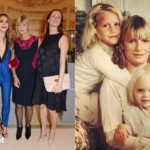

There are few television professions that look as effortless as weather presenting. A presenter walks into a studio, stands in front of a map, explains what the atmosphere is doing and moves on to the next story. Yet behind those few minutes on screen can be years of mathematical study, scientific training, forecasting experience and the ability to explain complicated information under pressure. Clare Nasir has spent much of her professional life mastering exactly that combination. She became familiar to British television audiences through GMTV and later worked across ITV, BBC and Channel 5, but her career has always rested on something deeper than television presence: she is a professionally trained meteorologist with a strong academic background in mathematics and applied marine science.
Born in Milton Keynes in 1970, Nasir developed an interest in the natural world that eventually led her toward meteorology. Her route was not simply a case of becoming a television personality and learning about weather afterward. She studied mathematics at the University of Plymouth, followed that with a master’s degree in Applied Marine Sciences and then completed intensive professional meteorological training with the Met Office. That scientific foundation became the backbone of a broadcasting career that has lasted for decades. It also allowed her to approach weather presentation with genuine technical knowledge rather than treating forecasting as merely a television performance.
What makes Clare Nasir’s story particularly compelling is the way her career has continued to evolve. She has worked as a forecaster, television presenter, producer, writer, filmmaker and science communicator, while later becoming increasingly involved in climate communication. Her work has taken her from weather centres and morning television to climate podcasts, educational projects and discussions about the relationship between weather, climate and society. More than three decades after beginning her professional journey, she remains an active figure in British meteorology and broadcasting, demonstrating how a career built around one subject can continue to develop as that subject becomes increasingly important to the public.
Clare Nasir Quick Facts
| Fact | Details |
|---|---|
| Full name | Clare Lyn Nasir |
| Date of birth | June 20, 1970 |
| Age | 56 in 2026 |
| Birthplace | Milton Keynes, Buckinghamshire, England |
| Nationality | British |
| Profession | Meteorologist, weather presenter, author, broadcaster and science communicator |
| Education | Kingsbrook School; University of Plymouth |
| University degree | Honours degree in Mathematics |
| Postgraduate qualification | MSc in Applied Marine Sciences |
| Professional training | Met Office meteorology training |
| Husband | Chris Hawkins |
| Children | One daughter |
| Years active | 1990s–present |
| Best known for | GMTV, ITV, BBC, Channel 5 and Met Office weather broadcasting |
| Books and writing | Weather and climate books, including children’s science titles |
| Current interests | Meteorology, climate communication, weather science and environmental issues |
| Net worth | No reliably verified public figure available |
| @clarenasir | |
| X/Twitter | @clarenasir |
| Clare Nasir |
Public sources do not establish a reliable figure for Clare Nasir’s personal net worth. Numerical estimates published by celebrity-biography websites should therefore be treated cautiously rather than as confirmed financial information.
Early Life and Family Background
Clare Nasir was born and raised in Milton Keynes in 1970, at a time when the town was developing rapidly as one of Britain’s best-known planned new towns. Her early environment helped shape a personality that was curious about different subjects rather than restricted to a single academic interest. According to her University of Plymouth profile, she left school with A-levels in geography, history and mathematics before entering the university in 1989. That combination is revealing because it brought together mathematical thinking, an understanding of place and people, and an interest in the world around her.
Music was another important element of her family background. Biographical sources have noted that Nasir plays the saxophone and that several of her brothers became professional musicians. Her family therefore provided an environment in which both analytical and creative interests could exist side by side. That combination would later become useful in her career because weather forecasting requires scientific accuracy, while broadcasting demands creativity, confidence, timing and an ability to connect with an audience.
Nasir has generally kept the most private aspects of her childhood and family life away from the spotlight. While public sources identify some details about her siblings and later family, there is considerably less reliable information about her parents than can sometimes be found on celebrity biography websites. This is an important distinction when discussing her life: the publicly documented story is strongest when it concerns her education and professional career, while some personal claims circulating online should not automatically be treated as established fact.
Education and Scientific Foundations
Nasir’s academic journey is one of the most important parts of her biography because it explains why she was able to move so successfully into professional meteorology. She attended Kingsbrook School and completed A-levels in mathematics, geography and history. In 1989 she gained a place at the University of Plymouth, where her studies initially offered a broad scientific base. Her university course included mathematics alongside subjects such as oceanography, meteorology and astronomy before she increasingly specialised in applied mathematics.
She went on to complete an MSc in Applied Marine Sciences, with her postgraduate study supported by the Natural Environment Research Council. Her academic work included atmospheric dynamics, which proved especially valuable when she later applied to the Met Office. Nasir has explained that the combination of a mathematics degree, postgraduate applied science and her work on atmospheric dynamics made her a strong candidate for professional forecasting training. Her education was therefore not an unrelated stepping stone to television; it directly prepared her for the scientific profession that came first.
After university, Nasir completed an intensive five-month residential course in meteorology with the Met Office. This was the point at which academic knowledge became practical forecasting expertise. Professional meteorology involves far more than recognising clouds or knowing whether rain is coming; forecasters must interpret observations, atmospheric models, pressure systems and evolving weather patterns while making decisions that can affect aviation, transport, public services, businesses and the media. Nasir’s formal training gave her the credibility that would later distinguish her television career from that of a conventional presenter.
Starting Her Career with the Met Office
Nasir’s first professional chapter was rooted firmly in meteorology rather than entertainment. After completing her training, she worked at the London Weather Centre, where she was involved in forecasting and supplying weather information to radio stations and other media organisations. The experience placed her in an environment where scientific knowledge had to be translated quickly into information that broadcasters and members of the public could understand. It was an early lesson in the communication skills that would later become one of her greatest professional strengths.
Her early career then expanded beyond London. She worked as a forecaster and presenter associated with Anglia Television and later returned to London for Carlton Television. These roles gradually brought her closer to the world of mainstream television while preserving the scientific side of her profession. Rather than making a sudden leap from science into celebrity, Nasir developed through a series of increasingly visible forecasting and broadcasting positions.
This period also demonstrated the flexibility that would become a recurring theme throughout her career. Weather broadcasting was changing rapidly, and audiences wanted forecasts that were not only accurate but also clear, engaging and relevant to everyday life. Nasir’s background allowed her to operate comfortably in both environments. She understood the science behind a forecast, but she also understood that viewers needed a concise explanation of what that science meant for their morning commute, weekend plans, holidays or safety.
GMTV and the Rise of Clare Nasir
The major turning point in Nasir’s television career came in 2000 when she joined GMTV as maternity cover for regular weather presenter Andrea McLean. What might have been a temporary opportunity eventually became a long-term position. Nasir’s television work expanded, and she became increasingly associated with GMTV’s weather coverage. Her ability to present forecasts while contributing to broader science and lifestyle material made her a valuable part of the programme.
By 2001, she had become weather producer and presenter, taking responsibility for weather output and weather-related features. This was an important development because it showed that her role was not limited to appearing in front of the camera. She was involved in the production and editorial side of weather coverage as well. Her University of Plymouth profile later recalled that during her decade at GMTV she worked on science and weather stories while also presenting travel, lifestyle and special features.
One of the most memorable moments from this period occurred during an outside broadcast from Bridlington. Nasir was reporting in difficult coastal conditions when a large wave broke over the harbour wall and swept over her, temporarily taking her out of shot. The incident became a memorable example of the unpredictability of live weather broadcasting. It also captured something fundamental about the profession: a weather presenter may explain the conditions, but sometimes the weather itself becomes the most dramatic part of the broadcast.
Life Beyond GMTV: ITV, BBC and Channel 5
Nasir’s departure from GMTV did not mark the end of her television career. Instead, it opened another stage in which she worked across different broadcasters and formats. She continued presenting weather and appeared in science and factual programming, including work connected with ITV and the BBC. Her career gradually became broader than the traditional short weather segment, allowing her to explore extreme environments, science stories and other television formats.
Her broadcasting experience also took her into programmes such as Fierce Earth, the CBBC science series that explored extreme environments and weather. Nasir’s own account of her career describes filming in places ranging from extremely cold environments to some of the hottest and driest locations on Earth. These experiences gave her the opportunity to demonstrate that meteorology is not simply about predicting tomorrow’s temperature; it is a science that helps explain some of the planet’s most powerful natural processes.
Channel 5 became another significant part of her broadcasting identity. She has been strongly associated with Channel 5 weather and continued to work across television while maintaining her connection with professional meteorology. Her long career across several British broadcasters is a reflection of both adaptability and technical credibility. She could move between a mainstream morning programme, a regional news bulletin, a science documentary and a specialist weather role without losing the scientific authority established during her Met Office training.
Climate Science and Environmental Communication
As Clare Nasir’s career matured, climate communication became an increasingly important part of her professional identity. The distinction between weather and climate is crucial: weather concerns atmospheric conditions over shorter periods, while climate describes longer-term patterns and changes. Nasir’s scientific background and television experience placed her in a strong position to help audiences understand that difference and to discuss why individual weather events can form part of larger climate conversations.
Her work with the Met Office has included creating and presenting content designed to explain climate science in accessible language. She has been involved in climate-focused conversations and podcasts examining subjects such as climate tipping points, extreme weather, changing rainfall patterns and other environmental issues. In her own account of returning to the Met Office, she described the organisation as a place where she could combine her love of weather and climate with communication work.
This evolution is particularly relevant in the modern media environment. Audiences increasingly want to understand not only whether a heatwave, storm or period of heavy rainfall is expected, but also what scientists know about changing weather patterns and climate risk. Nasir’s role has therefore expanded from simply delivering forecasts to helping people interpret scientific information. Her career demonstrates how a traditional television meteorologist can become a broader public science communicator.
Clare Nasir as an Author and Science Communicator
Writing has provided another way for Nasir to share her enthusiasm for meteorology. She has written books about weather and climate, including children’s titles designed to make atmospheric science approachable for younger audiences. Her writing complements her television work because it allows concepts that might receive only a few minutes of explanation on television to be explored in a more accessible and imaginative format.
Her children’s science writing reflects a recurring theme in her career: curiosity. Weather is something every child encounters, yet many of its processes are surprisingly complex. Clouds, rain, wind, storms and temperature changes provide natural starting points for explaining physical science. By turning those subjects into stories and accessible explanations, Nasir has helped make meteorology feel less like an intimidating academic discipline and more like something that can be explored through everyday observation.
She has also written and spoken about science and weather through digital media and podcasting. Her work as a climate communicator has allowed her to interview or engage with scientific experts while helping translate specialist ideas for a wider audience. This ability to operate between scientists and the public is arguably one of the strongest themes running through her career. Whether she is standing beside a weather map or speaking with a climate researcher, her central role remains the same: making complex information understandable.
Clare Nasir’s Husband and Family Life
Clare Nasir has been married to broadcaster Chris Hawkins since March 2005. Hawkins is known for his work in radio and music broadcasting, including his association with BBC Radio 6 Music. Their relationship brings together two people who have spent much of their professional lives in broadcasting, although their areas of expertise are very different. Nasir’s career has centred on meteorology and science, while Hawkins has built his reputation around music and radio.
The couple have one daughter, Sienna Clare Nasir Hawkins, who was born in November 2009. Her arrival came during a busy stage of Nasir’s professional life, and becoming a mother inevitably added another dimension to the balance between public work and private responsibilities. Nasir has spoken about family life in ways that reveal a strong commitment to maintaining perspective outside television and professional commitments.
Despite her public career, Nasir has generally avoided turning her family into a constant feature of her media presence. That balance is significant because television personalities can easily find their private lives becoming part of public discussion. In Nasir’s case, her professional achievements have remained the central focus. Her family appears as an important part of her life story without overwhelming the identity she has built through meteorology, science communication and broadcasting.
Clare Nasir’s Personality, Interests and Life Away from Weather
One of the more distinctive elements of Nasir’s personality is the combination of science and creativity. Her musical background, including playing the saxophone, sits alongside a career built around mathematics, atmospheric science and forecasting. That mixture helps explain why she has been comfortable moving between technical subjects and entertainment-oriented broadcasting. She can approach a scientific topic with precision without losing the human warmth necessary for television.
Her television career has also included projects outside conventional weather presentation. She has appeared in entertainment programming and taken part in physically demanding television projects, while her work on extreme-environment programmes required her to travel to challenging locations. These experiences show that her professional interests have never been limited to sitting inside a studio. She has repeatedly been willing to experience the subjects she discusses firsthand.
Fitness has also appeared in her public career. Around the end of the 2000s, she became involved with a fitness DVD project, demonstrating another side of her media versatility. While these projects are secondary to her meteorological career, they illustrate why Nasir has remained a recognisable broadcaster rather than becoming known exclusively as a technical forecaster. Her professional identity has always included communication, presentation and a willingness to explore different subjects.
Clare Nasir Net Worth and Sources of Income
Questions about Clare Nasir’s net worth are common because of her long career in British television, but there is no authoritative public figure that can establish exactly how much wealth she has accumulated. Celebrity websites sometimes publish estimated net-worth figures, but these numbers often appear without transparent financial evidence. They may speculate about salaries, property, investments, contracts and other assets that are not publicly documented. For that reason, a precise figure should not be presented as fact.
What can be established is that Nasir has had multiple professional income streams over a career spanning decades. These have included television presenting, professional meteorology, production work, writing, broadcasting, speaking and science communication. She has also undertaken specialist presenting and hosting work connected with science and environmental subjects. Her experience with major broadcasters and the Met Office gives her a substantial professional profile, although the financial value of individual contracts has not been publicly disclosed.
The most responsible assessment, therefore, is that Clare Nasir has built a successful and diversified career rather than attaching an unsupported number to her personal fortune. Her professional longevity is itself significant. Remaining relevant across changing television formats, digital media and the growing field of climate communication suggests that her value has come from a combination of expertise, experience and adaptability rather than from a single high-profile role.
Clare Nasir on Social Media
Social media has given Nasir another way to communicate directly with audiences outside scheduled television broadcasts. Her public presence has included platforms such as X/Twitter and LinkedIn, where she has shared professional updates, weather-related information and discussions around climate and science. Her online activity reflects the wider development of her career from traditional broadcasting toward digital science communication.
LinkedIn is particularly useful for understanding the professional side of her current work. Her profile identifies her as a meteorologist and communicator and provides a window into projects connected with weather, climate and media. Instead of using social platforms solely for celebrity-style personal updates, she frequently uses them to discuss professional subjects and share information related to her field.
Her social-media approach therefore fits naturally with the broader direction of her career. Television provides the immediate forecast, while digital platforms can provide additional context and longer explanations. For a meteorologist working in an era when climate information is increasingly debated online, this ability to communicate across different platforms has become an important professional skill.
Clare Nasir’s Recent Career and What Comes Next
Clare Nasir’s professional story is still developing. Her connection with the Met Office has continued beyond the early forecasting work that began her career, and her later role has included communication and content creation. Her return to the organisation in 2015 represented an important homecoming because the Met Office was where her professional meteorological training had begun decades earlier.
The focus of her work has increasingly reflected the changing importance of climate and environmental information. Weather forecasting is now closely connected with discussions about infrastructure, renewable energy, extreme weather preparedness and climate resilience. Nasir’s scientific background makes these subjects a natural extension of her earlier career, while her broadcasting experience gives her the tools to explain them to audiences without a specialist scientific education.
Looking ahead, science communication is likely to remain one of the most meaningful areas of her work. The public needs trusted voices capable of explaining atmospheric science without unnecessary jargon, particularly when weather events become politically or socially controversial. Nasir’s combination of professional meteorology, television experience, writing and environmental communication places her in a strong position to continue filling that role.
Clare Nasir’s Legacy in British Meteorology and Television
Clare Nasir’s career is ultimately a story of progression rather than a single breakthrough moment. She began with an interest in mathematics and the natural world, studied at university, completed postgraduate scientific training and then became professionally qualified in meteorology. From there she developed into a television presenter whose scientific credentials remained central to her work. Her path from the Met Office to GMTV and then across ITV, BBC and Channel 5 demonstrates how technical expertise can provide a foundation for a long media career.
Her influence extends beyond the familiar television forecast. Through children’s books, science programmes, podcasts, climate conversations and public communication, she has repeatedly found ways to make scientific ideas more approachable. That may ultimately be more significant than any individual television appearance. Weather is something everyone experiences, and people who can explain it clearly help audiences become more informed about the world around them.
The most inspiring part of Clare Nasir’s journey is the way she has continued to adapt without losing sight of her original passion. Mathematics led her toward atmospheric science; meteorology opened the door to broadcasting; broadcasting created opportunities for education and science communication; and her continuing relationship with climate science has given the later stages of her career a wider purpose. Her story is a reminder that success does not necessarily mean staying in one role forever. Sometimes it means taking the knowledge gained from one chapter and using it to build something more meaningful in the next. As Clare Nasir continues to communicate weather, climate and science to new audiences, her career stands as an example of how curiosity, perseverance and genuine expertise can create a professional legacy that continues to evolve.